

Pumps are used to transfer water for countless operations across South Africa, from process water for bustling Johannesburg industries, to irrigation water for viticulture in the Western Cape.
But not all pumps are created equal. Choosing the right pump is crucial for efficiency, reliability, and cost-effectiveness.
Understanding the different types of pumps available is the first step.
This guide explores various pump categories and their typical applications, helping you navigate the options available from pump suppliers.
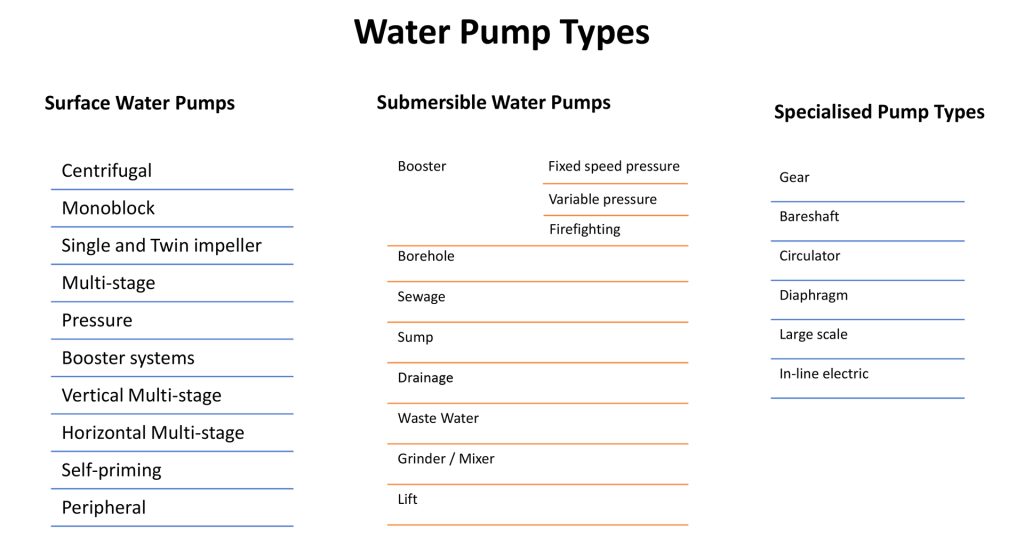
Water Pump Types:
Types of Centrifugal Pumps:
Centrifugal pumps are the most widely used pump type globally and across South Africa due to their simplicity, efficiency for many applications, and cost-effectiveness.
They use a rotating impeller to draw fluid in and expel it through centrifugal force.
1. End-Suction Centrifugal Pump
- Description: Most common type; fluid enters from one side and exits from the top.
- Uses: General water transfer, HVAC, irrigation.
2. Single stage Centrifugal Pump
- Description: Have one impeller, suitable for lower pressure applications
- Uses: General water transfer or circulation.
3. Multi stage Centrifugal Pump
- Description: Contains two or more impellers for higher pressure output.
- Uses: Boiler feed, reverse osmosis, high-rise buildings.
4. Vertical Centrifugal Pump
- Description: Vertically mounted pump with compact footprint; motor above the pump.
- Uses: Limited space applications, sump pits, and industrial cooling water systems.
5. Vertical Inline Centrifugal Pump
- Description: Compact, vertical design with inline suction and discharge.
- Uses: Space-constrained HVAC systems, pressure boosting.
6. Self-Priming Centrifugal Pump
- Description: Capable of evacuating air from the suction line to lift fluid.
- Uses: Drainage, dewatering, and wastewater applications.
7. Industrial Centrifugal Pumps
- Description: Heavy-duty pumps engineered for continuous use in demanding environments.
- Uses: Manufacturing, oil & gas, chemical processing, and power generation.
8. High Pressure Centrifugal Pump
- Description: Specifically designed to deliver fluid at very high pressures.
- Uses: High-rise building water supply, firefighting systems, and boiler feed.
9. Sump Centrifugal Pump
- Description: A vertical pump typically installed in a sump pit for drainage.
- Uses: Basement water removal, stormwater drainage, and industrial pits.
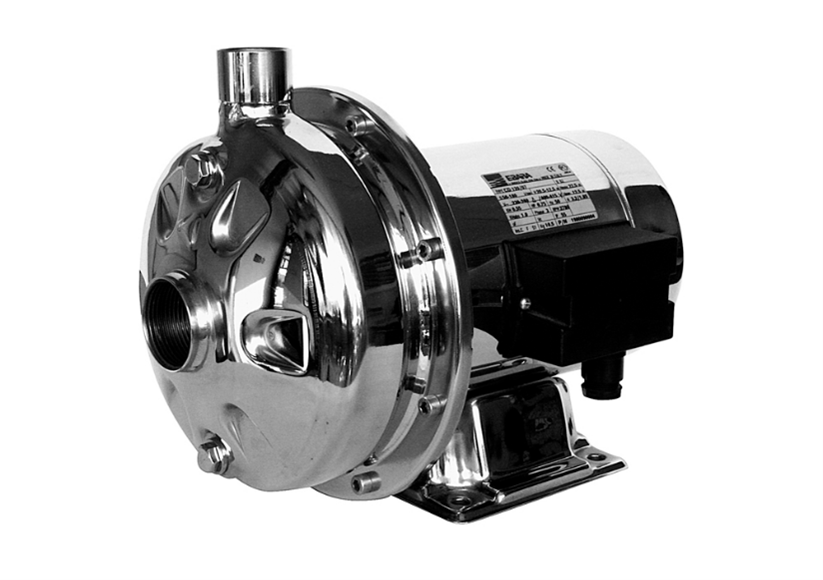
10. Stainless Steel Centrifugal Pump
- Description: Corrosion-resistant pump made of stainless steel for durability.
- Uses: Food processing, pharmaceuticals, chemicals, and clean water systems.
What do you need a water pump for?
Types of Hydraulic Pumps:
Hydraulic pumps convert mechanical energy into hydraulic energy (flow). They don’t pump fluid out in the same way as transfer pumps, but rather circulate hydraulic fluid within a closed system to power actuators.
1. Gear Pump
- Description: Uses two meshing gears to pump fluid; simple and robust.
- Uses: Industrial equipment, agricultural machinery, and mobile hydraulic systems.
2. Screw Pump
- Description: Uses two or more intermeshing screws to move fluid; very smooth and quiet operation.
- Uses: Marine hydraulics, lubrication systems, and high-viscosity fluids.
3. Peristaltic Hydraulic Pump
- Description: Moves fluid through a flexible tube by squeezing it with rollers or shoes.
- Uses: Metering, chemical handling, and medical or food-grade applications.
4. Hand (Manual) Pump
- Description: Operated by hand for generating hydraulic pressure in low-volume systems.
- Uses: Emergency equipment, testing systems, and small jacks or presses.
5. Positive Displacement Pump
- Description: Moves fluid by trapping a fixed amount and forcing (displacing) it through the system. It delivers a consistent volume regardless of pressure changes.
- Uses: Applications requiring high pressure and precise flow—such as hydraulic presses, heavy machinery, and dosing systems.
Have a question about a Hydraulic Pump?
Ask us – contact us here.

Different Types of Industrial Pumps:
South Africa’s diverse industrial landscape requires robust and specialised pumping solutions.
Some different types of industrial pumps commonly found are:
• Heavy-Duty Centrifugal Pumps (e.g., ANSI / ISO Process Pumps)
Built for demanding applications in chemical processing, mining slurry transport, pulp and paper, manufacturing, and wastewater.
• Diaphragm Pumps (Air-Operated or Mechanical)
For handling abrasive, corrosive, or shear-sensitive fluids. Common in chemical transfer, wastewater treatment, and food processing.
• Gear Pumps (Internal/External)
Used for viscous fluids like oils, resins, and chemicals, often providing precise dosing.
• Peristaltic (Hose) Pumps
Gentle pumping action ideal for sanitary applications (food, beverage, pharmaceutical) or handling abrasive slurries without contamination.
A Wide Range of Industrial Pumps
Wastewater Pump Types
Cryogenic, Oil & Gas Pump Types
Next Steps:
Choosing the Right Pump for Your Needs
As we’ve seen, there are many different types of pumps, each engineered for specific tasks and fluid types. From ensuring reliable water supply with the correct water pump types to driving heavy machinery with robust types of hydraulic pumps, or handling specialized materials with various different types of industrial pumps, making the right choice is important.
Factors like fluid viscosity, corrosiveness, required flow rate, pressure (head), temperature, and the presence of solids all influence the ideal pump selection.
Consulting with experienced pump engineers can save time, money, and prevent operational headaches.
Ask an Experienced Engineer
To consult with our Engineer, who has specialised knowledge of wastewater pumps, please ask your questions here.